




Choosing a slitter knife material is not simply a competition for the highest hardness number. An industrial knife must stay sharp, maintain its geometry, withstand the actual cutting load, and deliver acceptable edge quality between planned maintenance stops. A blade that survives a long time but chips unexpectedly may cost more than a less expensive blade that can be resharpened predictably. Conversely, a low-cost blade that needs frequent changes can make a high-volume converting line unnecessarily expensive to operate.
This buyer's guide compares D2 vs HSS, separates conventional M2 from cobalt-bearing M42 high-speed steel, and explains when tungsten carbide slitter blades offer a commercially meaningful advantage. It is written for procurement managers, plant engineers, slitter operators, maintenance teams, and OEM equipment builders working with paper, board, film, labels, adhesive laminates, aluminum and copper foil, and metal coil. The aim is not to declare a universal winner; it is to build a repeatable method for selecting and buying the right knife for a specific line.
GUANG CHUAN manufactures custom industrial cutting tools for these applications. Its circular slitter knife selection guide explains blade families and machine configurations, while this article goes deeper into material metallurgy, operating life, failure mechanisms, purchasing economics and acceptance criteria. Buyers comparing actual part configurations can also examine top and bottom slitter knives for paper converting and rotary slitter knives for coil-processing equipment.
The short answer: Start with D2 for a cost-sensitive, controlled application where its wear resistance is adequate. Evaluate M2 when the process needs a more balanced high-speed-steel option with dependable edge performance. Consider M42 when harder operating conditions justify its higher alloy and heat-treatment cost. Trial an appropriate cemented-carbide grade when abrasive wear, edge consistency and expensive stoppages dominate the economics—and only when the holder, geometry and handling practices can manage its lower damage tolerance. These are starting hypotheses, not guarantees of blade life.
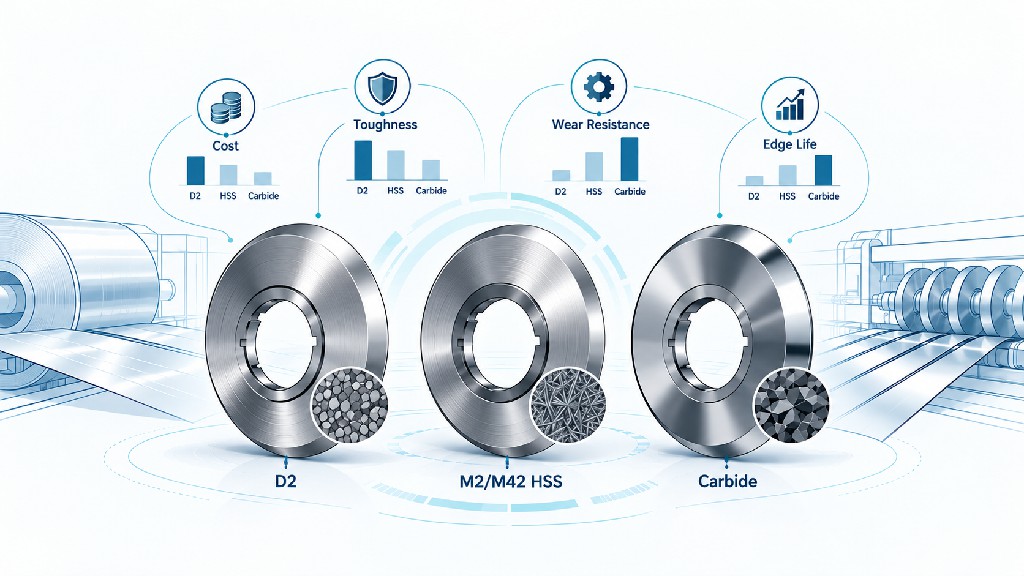
The table below combines supplier-published metallurgy with engineering selection judgments. The hardness figures describe representative material conditions or actual carbide grades, not guaranteed finished-knife acceptance values. Finished hardness depends on the heat-treatment route, section size and intended cutting application. D2, M2 and M42 use Rockwell C (HRC); carbide examples use Vickers HV30 or Rockwell A (HRA), so the figures must not be treated as directly comparable numbers.
| Selection factor | D2 cold-work tool steel | M2 high-speed steel | M42 cobalt HSS | Cemented tungsten carbide |
|---|---|---|---|---|
| Material identity | High-carbon, roughly 12% chromium cold-work steel | Molybdenum/tungsten/vanadium HSS | High-molybdenum HSS with about 8% cobalt | WC grains bonded with a metallic binder, commonly cobalt |
| Representative hardness | Commonly around 58–62 HRC for industrial shears | About 64 HRC typical tempered value | About 67 HRC typical tempered value | Highly grade-specific; published examples include 1,280–1,830 HV30 |
| Main advantage | Familiar processing, good abrasive-wear resistance and manageable acquisition cost | Useful wear/toughness/temperature-resistance balance | High attainable hardness and hot-hardness potential | Very high abrasion resistance and prolonged edge stability when properly applied |
| Main limitation | May wear faster in demanding high-volume or abrasive service; limited cracking resistance | Costs more than D2 and still experiences abrasive wear | Extra cost and no automatic life improvement over M2 | Chipping, fracture and handling risk; specialized regrinding and grade selection |
| Typical purchasing position | Economic baseline | Balanced upgrade | Premium steel option | Specialized wear-resistant option |
| Application starting point | General paper, some film and controlled coil shear | Faster or more abrasive paper/film/foil service | Selected demanding HSS applications after a trial | Thin foil, filled/coated webs and high-volume precision slitting where impact is controlled |
For auditable reference points, Uddeholm's Sverker 21 data identifies AISI D2 and gives 58–60 HRC as a recommendation for circular shears. Griggs Steel's HSS chemistry and hardness table publishes representative tempered values of 64 HRC for M2 and 67 HRC for M42. CERATIZIT's cemented-carbide grade table illustrates how carbide hardness changes with binder content and microstructure. None of those documents establishes a universal service-life multiplier for a customer's slitter line.
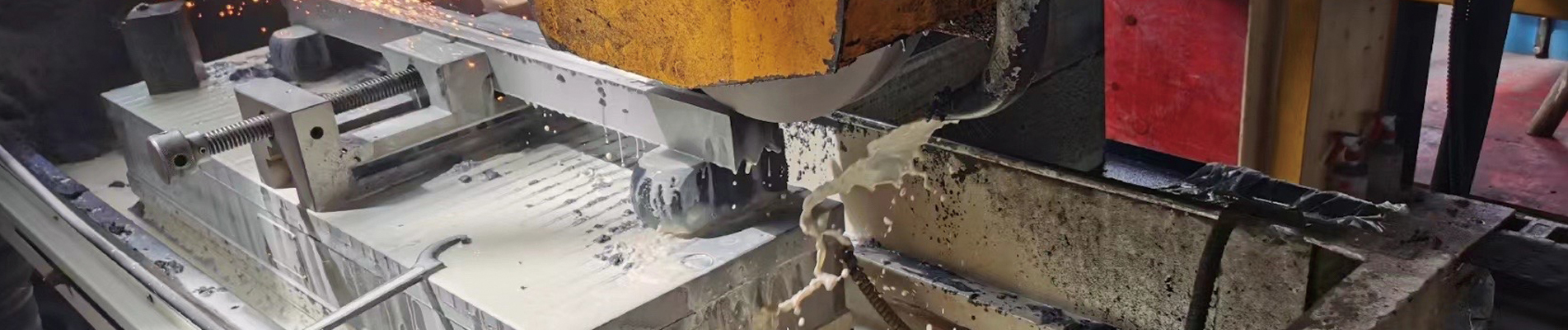
Two rotary knives with identical outside diameter can perform very differently if one works in shear slitting and the other in score slitting. Shear slitting uses a top knife and bottom knife to create a continuous scissors-like separation. Score slitting presses a knife into a web supported by an anvil roll. Razor slitting penetrates a moving web with a very thin edge. Crush cutting and other arrangements introduce yet another contact condition. These mechanisms change the wear pattern and the stress on the edge. A grade that excels in one method may be a poor investment in another.
In shear slitting, the knife's job is to concentrate force at a controlled line of contact. If the side clearance is too large, the material may stretch, fold or tear before separating. If it is too tight, the knives may rub, generate heat, damage their faces and chip. Excessive overlap, high side force or inaccurate arbor alignment can create similar symptoms. When those conditions cause early failure, changing D2 to M42—or buying carbide—may merely increase the price of the failure. GUANG CHUAN's clearance, overlap and side-force setup guide offers a practical starting point for diagnosing the system.
The substrate also changes the problem. Thin polyethylene film may suffer stretching and heat-related smearing. Mineral-filled film and coated paper may create strong abrasive action. Adhesive tape can load the edge with deposits. Aluminum and copper foils may require a very stable, fine edge, while thicker metal strip places a heavier mechanical load on the knife. Some metal alloys encourage adhesion or built-up material. A single label such as “high-speed slitter knife” is therefore insufficient for procurement.
A good material review starts with four questions. What material is being slit, including fillers and coatings? What defect actually forces knife removal? What are the machine's cutting geometry and operating speed? What is the fully loaded cost of a knife change, including rework, scrap and lost production? When those facts are known, the technical and economic comparison becomes much more reliable.
AISI D2 is a high-carbon, high-chromium cold-work tool steel. It develops substantial wear resistance through its alloyed martensitic matrix and hard carbides, while remaining familiar to established heat-treatment and grinding supply chains. It is widely encountered in punches, dies, shear blades, rotary knives and other cold-work tooling. The steel is not stainless despite its chromium content; corrosion protection and careful storage still matter.
The representative chemistry reported for Uddeholm Sverker 21, a D2-type grade, is approximately 1.55% carbon, 11.3% chromium, 0.8% molybdenum and 0.8% vanadium, with smaller additions of other elements. Those are one producer's typical figures, not exact limits for every mill. The same data sheet highlights high wear resistance and compressive strength, but also makes clear that cracking resistance is limited relative to some modern tool steels. It would therefore be inaccurate to call D2 the toughest material in this comparison simply because it is less hard than M42.
For many paper-converting and moderate coil-slitting jobs, D2 is an economical starting specification because it combines established processing with sufficient working hardness. A finished circular shear might be targeted near 58–60 HRC, subject to blade size, cut material, process loading and customer requirements. “Maximum possible hardness” is rarely an adequate instruction. A very hard edge can become more vulnerable to local damage when the line has vibration, intermittent contact or poor side alignment.
D2 is particularly attractive when the line operates in stable batches, when operators can monitor edge deterioration, and when nearby sharpening services can restore the blade quickly. It also helps where multiple sets of knives are needed and the initial tooling budget matters. A plant starting with D2 can establish baseline evidence: meters cut before an unacceptable burr, total sharpening cycles, reject percentage and average changeover minutes. That measured baseline then makes a premium-material trial commercially meaningful.
The limitations are equally important. On a highly abrasive coating or continuous high-volume web, the edge can round before the next scheduled stop. On poorly aligned machines, D2 may exhibit micro-chipping or cracking instead of benign wear. High contact temperatures can aggravate loss of edge condition. If D2 is being replaced due to incorrect spacing, the solution is to correct spacing first—not automatically to substitute expensive high-speed steel. If D2 is being replaced due to measured abrasion under otherwise controlled conditions, M2, M42 or carbide deserves a structured trial.
M2 is a molybdenum-type high-speed steel containing tungsten, chromium and vanadium. A representative Griggs Steel chemistry is roughly 0.83–0.85% carbon, 4.15% chromium, 6.15% tungsten, 5.1% molybdenum and 1.95% vanadium, with no intentionally specified cobalt content in the cited conventional M2 grade. Published typical tempered hardness is approximately 64 HRC. Griggs' M2 data sheet describes a balanced combination of wear resistance, toughness and red hardness and lists knives among common applications.
The phrase high-speed steel sometimes misleads converting buyers. It does not mean that every M2 knife should run at a particular line speed, nor does it guarantee a higher maximum slitter speed. The name comes from the family of steels developed to retain useful cutting properties under temperature conditions that challenge ordinary tool steels. The actual running limit of a web line can instead be controlled by bearing speed, blade geometry, web tension, frictional heating, winding quality, adhesive behavior or safety restrictions.
Compared with D2, M2 may provide a valuable performance balance where sustained friction, wear and repeated sharpening matter. Because M2's chemistry and carbide system differ from D2's, its behavior should not be reduced to a three-point HRC increase. Microstructure, heat treatment, carbide distribution, cutting-angle design and finish have a substantial influence on how the edge behaves in service. For a premium M2 replacement, ask the manufacturer for the material designation and documented finished condition instead of relying on a catalog label such as “super HSS.”
A sensible M2 trial holds all other variables as constant as possible. Use the same upper/lower knife pair design, dimensions, edge angle, polishing specification and holder setup as the D2 baseline. Record the cutting length or accepted output to the same rejection threshold. Separate wear from accidental damage. If an M2 knife lasts 50% longer in a particular line but costs 80% more, that difference may still be justified when changeover downtime dominates the total cost. If the line changes jobs every few hours anyway, the life extension may have little value.
M2 also remains a practical steel from a service perspective. Many qualified tool grinders can resharpen it, although the correct grinding wheel, coolant and thermal control are important. A reworked knife must remain within its permitted outside diameter, thickness, edge location and runout limits. When the main wear mechanism is mild and all knives already survive the entire planned production batch, upgrading from D2 to M2 may not reduce any real production cost.
M42 is a different HSS chemistry, not simply “M2 with a little extra cobalt.” The representative Griggs M42 data lists approximately 1.1% carbon, 3.9% chromium, 1.6% tungsten, 9.5% molybdenum, 1.2% vanadium and 8.25% cobalt, along with a typical tempered hardness around 67 HRC. Cobalt helps its high-temperature hardness behavior, which can be valuable in cutting processes that impose substantial thermal load.
That does not mean a room-temperature paper slitter automatically benefits from an expensive cobalt steel. Many slitting lines never operate under the extreme temperatures associated with high-speed machining. In those situations, the premium may buy little more than a hardness number. M42 becomes more plausible where the conventional M2 edge shows a repeatable, thermally influenced wear pattern or loses edge quality before the required planned run length. It can also be useful where its combination of hardness and controlled edge preparation meets a specific customer's quality target.
A higher nominal HRC is not proof of better toughness or longer knife life. An edge that is highly resistant to gradual wear can still chip if its bevel is too acute, the lower knife hits it, or the web contains a hard foreign object. Griggs notes applications for M42 in interrupted cuts, but the correct conclusion is that a suitable M42 tool may tolerate certain demanding cutting conditions, not that M42 is immune to breakage or universally stronger than M2. Slitter geometry and the finished microstructure remain decisive.
For procurement, compare M42 to M2 rather than only to D2. Ask what failure mechanism M42 is supposed to eliminate, how much extra accepted output it needs to deliver, and whether the sharpening vendor can regrind it without causing heat damage. Its higher alloy content and specialized processing can increase both purchase and maintenance expense. An M42 investment is strongest when an M2 knife demonstrably wears out between expensive scheduled stops, the line geometry is stable, and repeatable pilot results show a reduction in cost per accepted meter.
In industrial purchasing, “tungsten carbide knife” generally means cemented carbide, not a single homogeneous block of pure tungsten carbide. Hard WC particles are consolidated with a metallic binder, most often cobalt. Grain size, binder fraction, porosity control and sintering quality strongly influence hardness and fracture behavior. Carbide therefore cannot be specified responsibly by the words “100% tungsten steel” or “premium carbide” alone.
The trade-off is fundamental. Smaller carbide grains and lower binder fractions tend to produce higher hardness and excellent abrasion resistance, while more binder or a different grain structure may provide greater fracture resistance at the cost of some hardness. The relationship is not a universal straight line because detailed processing and additional carbides matter. It is nevertheless a useful reason to discuss grade selection, not just material selection. A fine, hard grade chosen for stable film cutting might be vulnerable on a mechanically unstable coil line; a tougher grade could perform better even when its hardness is lower.
To make the range concrete, CERATIZIT lists grade ZG12 with 6% cobalt, 0.8–1.0 µm grain size and about 1,650 HV30, while grade ZG23 has 12% cobalt, 1–2 µm grain size and about 1,280 HV30 in its can-tooling technical publication. Another listed grade, ZS12, has 6% cobalt, sub-0.6 µm grain size and about 1,830 HV30. These are illustrative carbide-material data from a related tooling market, not confirmed GUANG CHUAN slitter-knife grade offerings and not performance claims for foil slitting. Their value here is to show the magnitude of variation hidden under the word carbide.
Carbide's commercial appeal grows when a clean, stable edge can stay in service through long production campaigns. Highly abrasive filled polymers, coated substrates and precision thin-foil jobs can be sensible trial candidates. Stable holders, accurate bores and low runout are critical. The material can be especially costly when mishandled: a dropped carbide ring or poorly packaged knife may acquire a chip that disqualifies it before installation. Changing to carbide also raises questions about specialized grinding, transport protection, fracture inspection, replacement lead time and backup stock.
Carbide is not always best for thick-gauge metal coil, impact-prone service, or poorly maintained shears. In those conditions, controlled steel-tool deformation or a more forgiving HSS edge may be preferable to brittle fracture. Composite constructions, carbide tips and coated steels are additional alternatives, but their suitability depends on the design and should not be confused with a monolithic carbide ring. The phrase carbide slitter blades is a family of engineered choices, not a performance guarantee.
Chemical composition gives insight into potential behavior, but suppliers do not purchase chemistry alone. Heat treatment transforms steel microstructure, sets the working hardness and affects retained austenite, residual stress, dimensional stability and crack resistance. Cemented carbide is manufactured by a different powder/sintering route, with its own binder and grain-size controls. The numbers in the next table are selected published examples, not universal specification limits.
| Material / published example | Carbon | Chromium | Tungsten | Molybdenum | Vanadium | Cobalt or binder | Reported representative hardness |
|---|---|---|---|---|---|---|---|
| D2-type Uddeholm Sverker 21 | 1.55% | 11.3% | Not listed | 0.8% | 0.8% | Not listed | D2 circular shears: recommended 58–60 HRC |
| Conventional M2, Griggs | 0.83% | 4.15% | 6.15% | 5.1% | 1.95% | Not specified | Typical tempered 64 HRC |
| Conventional M42, Griggs | 1.10% | 3.9% | 1.6% | 9.5% | 1.2% | 8.25% Co | Typical tempered 67 HRC |
| CERATIZIT ZG12 carbide example | Not comparable | Not comparable | WC-based | — | — | 6% Co | 1,650 HV30 / 92.2 HRA |
| CERATIZIT ZG23 carbide example | Not comparable | Not comparable | WC-based | — | — | 12% Co | 1,280 HV30 / 89.5 HRA |
The values come from the cited Uddeholm D2 technical brochure, Griggs Steel chemistry comparison and CERATIZIT grade publication. Note that the M2 chemistry can vary slightly even between a supplier's general table and its dedicated grade page; purchase agreements should reference an agreed standard and mill certificate rather than reproduce a marketing table as a tolerance specification.
Rockwell C hardness measures indentation depth under a specified load and indenter; Vickers hardness uses an indentation geometry and a calculated value. Hardmetals may be reported on HRA or HV scales. A buyer cannot say that “1,650 HV is twenty-five times harder than 64 HRC.” Those scales are not linear equivalents. Approximate conversion tables, where appropriate, are material-dependent and often unsuitable for comparing dissimilar steel and cemented-carbide systems. For a finished knife, ask the supplier to name the scale, test method, location and acceptance window. ISO 6507-1:2023 covers the Vickers method, including hard metals and cemented carbides.
Slitter-knife life depends on abrasive wear, adhesive transfer, edge chipping, corrosion, fatigue, side rubbing and the defect limit accepted by the product. Hardness is relevant but incomplete. A well-ground 60 HRC D2 knife in an accurately aligned holder can outperform a poor-quality 67 HRC knife with inappropriate heat treatment or damaged faces. The stronger procurement rule is to specify a material and a tested, inspected finished tool.
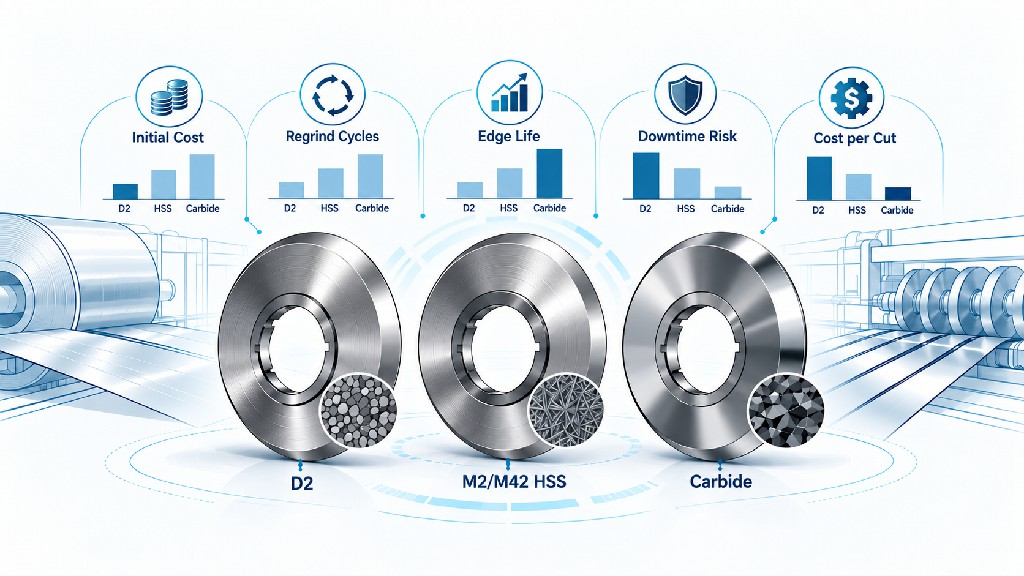
Knife removal is a business decision triggered by a process limit. Some plants replace a knife when an edge begins to feather; others permit more visible wear but stop at a measured burr height, dust level or web-break rate. A blade can remain structurally intact while becoming unfit for the finished product. Alternatively, a carbide knife can have a sharp edge over most of its circumference yet fail immediately due to one local chip.
| Failure mode | Observable production symptom | Common contributing factors | First corrective action |
|---|---|---|---|
| Abrasive rounding | Gradual increase in dust, fuzz, edge roughness or burr | Mineral filler, pigments, hard coatings, contact friction | Verify edge radius, confirm material and compare wear-resistant grades |
| Micro-chipping | Repeating localized slit defect | Blade collision, excessive side load, vibration, inclusions | Inspect edge under magnification and correct mechanical setup |
| Adhesive pickup | Stringing, tack, drag or smeared edge | Glue transfer, high local heat, poor surface finish | Clean safely; inspect polish, coating and operating conditions |
| Thermal damage | Discoloration, loss of edge consistency, unusually rapid deterioration | Rubbing, dry grinding damage, excessive side force | Check knife-to-knife contact and grinding procedure |
| Fracture or cracking | Sudden line stop or unusable tool | Impact, mishandling, excessive stress, unsuitable carbide grade | Quarantine tool and investigate root cause before restart |
| Geometry drift | Lane variation or inconsistent slit width | Runout, out-of-flatness, incorrect spacers, worn bearing | Measure installed system and tooling stack |
A good maintenance log must distinguish normal wear from abnormal damage. That distinction determines the next purchase. If normal wear is the major problem, the case for M2, M42 or carbide is relatively straightforward to test. If random chipping dominates, the plant should investigate alignment, vibration, handling and edge geometry before changing grade. If the substrate is adhesive, the best improvement may involve a surface finish or suitable anti-stick treatment rather than a harder bulk alloy.
For replacement decisions, GUANG CHUAN's resharpen-or-replace guide describes the importance of edge inspection and dimensional limits. The essential purchasing takeaway is that blade life should be measured as accepted production between interventions, not merely the time a blade remained installed.
Every industry uses the word slitting, but not every industry applies the same load to the cutting edge. A meaningful recommendation starts with the actual substrate and the line's inspection threshold. The following matrix is a preliminary engineering shortlist for controlled trials; it does not claim that every listed grade is appropriate for every machine or substrate within that category.
| Slitting application | Sensible first material to evaluate | When to test an upgrade | Special caution |
|---|---|---|---|
| Uncoated paper and general converting | D2 or M2 | M2 if fiber dust and edge wear interrupt production | Holder condition and shear settings may dominate results |
| Coated paper, filled film or abrasive laminates | M2; selected carbide grade | Carbide if abrasive rounding limits campaigns despite correct setup | Verify binder, grain size and chip resistance |
| BOPP, PE, PET and flexible packaging films | D2 or M2 according to cut method | Carbide where stable high-volume cutting shows a measurable benefit | Thin films can stretch or smear; hardness is not a substitute for geometry |
| Labels and adhesive tape | D2 or M2 with carefully specified finish | Coating or carbide after pickup and wear are separated diagnostically | Adhesive buildup may dominate over abrasive wear |
| Thin aluminum or copper foil | Precision M2 or properly specified carbide | Carbide for long runs with stringent edge consistency and controlled contact | Excessive force, runout or chipping can ruin delicate foil |
| Carbon-steel and stainless-steel coil | Correctly designed D2 or HSS rotary shear tools | M2/M42 or specialty grades after a load-and-wear review | Thickness, strength, edge burr and mechanical shock are critical |
Paper fiber orientation, basis weight, coatings, moisture content and cutting method all influence edge quality. When an uncoated paper line sees slow, uniform wear, a well-made D2 knife may already offer excellent purchasing value. When a high-volume line experiences abrasive edge rounding and dust, M2 becomes an important comparison. A selected carbide bottom knife or precision ring can be considered for stable equipment where the economics justify specialized tooling. However, “paper” can range from lightweight tissue to mineral-coated board; a grade chosen for one should not be copied blindly to another.
For corrugated board, the cutting mechanism can introduce intermittent or compressive load rather than gentle web shear. It is often wiser to check holder stability and knife profile than to insist on the hardest carbide available. The objective is a clean, repeatable edge with tolerable dust and minimal crushing. In an RFQ, identify paper grade, coating and thickness, not just the trade name of the converting line.
The material may be soft yet surprisingly difficult to slit well. A flexible film stretches ahead of a blunt blade and may produce a visibly poor edge before significant bulk metal loss has occurred. Laminated films can contain hard fillers, barrier layers and adhesives, producing mixed wear and transfer. A fine finish, suitable bevel, stable tension and correct contact conditions may outperform a major material upgrade.
M2 is a logical candidate when an established D2 design reaches its wear limit during long shifts. M42 may be considered if trials identify an M2 performance limitation under demanding conditions, but no universal rule says that cobalt HSS is necessary for every fast rewinder. Carbide may perform very well on abrasive, stable and high-volume jobs, provided its chosen grade resists the local stresses. When selecting a knife for adhesive tape, document whether an edge fails through gradual rounding or adhesive accumulation; those mechanisms call for different remedies.
Thin foil processing rewards stable geometry and predictable edge condition. The knife often must maintain a very fine edge while avoiding burrs, curling, tears and particles. Abrasive wear can matter, but so can microscopic chipping, edge polishing, holder precision and contamination control. Selected cemented-carbide grades are attractive trial candidates because they can retain edge geometry over long campaigns. That benefit disappears if an unsuitable carbide grade chips or if its brittle ring is distorted by poor mounting.
For battery or electronics applications, specify particle-control and cleanliness requirements explicitly. Merely buying carbide does not establish suitability for a particular battery-electrode process. Surface treatment, cleaning, binder selection, groove design and validated acceptance criteria may become part of the qualification. Run a controlled trial at the actual speed, web tension and coating condition; inspect the foil edge and reject rate across the run. The same discipline applies to precise paper and polymer substrates used in electronics.
The force system for metal coil is different from flexible web converting. Slit-edge formation involves deformation and fracture, and the customer may specify burr height, edge wave, camber or downstream formability. Knife clearance and overlap must be appropriate for the strip's thickness and mechanical properties. A premium grade can improve wear resistance but cannot correct an incorrect shear stack.
D2-type tool steels are established options for many cold-shear duties. HSS can also be selected according to the application and manufacturer experience. But a blanket prescription that “carbide is always best for stainless steel” is unsafe: high contact loading, abnormal impact and rigid assembly requirements can make the total risk unacceptable. Start with strip grade, tensile condition, maximum thickness and tolerances, then choose the knife material, bevel and heat treatment together. For more on this system-level problem, read GUANG CHUAN's metal-coil burr reduction guide.
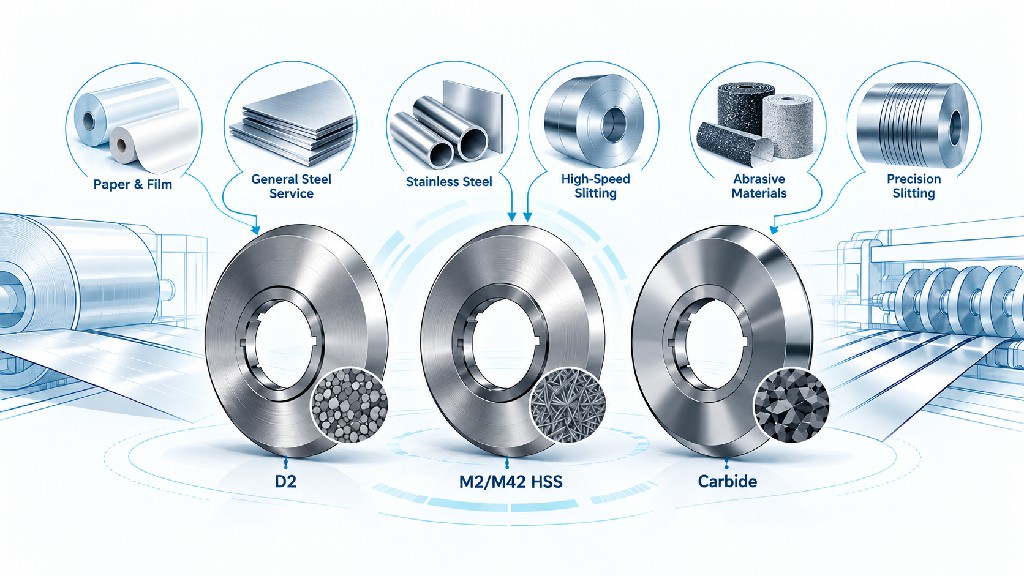
Purchasers often receive four quotations and sort them by unit price. That is a reasonable first screening method, but not an adequate final decision when the knives have different working lives. A more expensive material may reduce production interruptions, grinding events and rejected output. It may also increase losses when damage occurs, require a specialist sharpening service or create a larger inventory burden. Total cost of ownership (TCO) makes those trade-offs visible.
For this comparison, use one accepted-output basis, such as cost per 100,000 accepted linear meters or cost per million accepted square meters. Define it consistently across candidate knives. A practical formula for an evaluated knife cycle is:
Knife-cycle cost = purchase price + sharpening and transport + intervention downtime + setup labor + scrap/rework + any non-recoverable damage cost.
Knife cost per accepted meter = knife-cycle cost ÷ accepted production meters over the evaluated cycle.
The denominator is crucial. Counting gross meters run before excessive dust or burrs begin makes a knife appear more productive than it actually was. For multi-lane lines, report whether “meters” means web travel, sum of individual strip lengths or finished area; do not mix conventions between trials. Keep operating-speed assumptions, scrap definitions and the planned maintenance window identical for fair comparison.
Several indirect costs should be considered separately. A knife change during an already scheduled 30-minute cleaning period may impose almost no incremental lost production. The same change during a rush order may cause substantial disruption. A chipped carbide ring that requires express replacement can cost far more than its invoice price. A local D2 replacement with easy grinding support may carry less delivery risk. Procurement should assign an explicit value to reliability, traceability and inventory availability—not simply turn every qualitative concern into an invented market-price percentage.
The next table is a fictional decision model using illustrative US-dollar figures, deliberately chosen to demonstrate the calculation. It is not a GUANG CHUAN quotation, not independently measured blade-life data and not an industry price benchmark. The four alternatives are assumed to fit one controlled, stable converting line with equivalent geometry and accepted product quality. Each steel knife is purchased once and resharpened three times, giving four cutting intervals. The carbide knife is purchased once and resharpened once, giving two cutting intervals. Every interval incurs an assumed $120 changeover-related expense and $15 in associated waste. Other line costs are excluded.
| Example input or calculated result | D2 | M2 HSS | M42 HSS | Selected carbide |
|---|---|---|---|---|
| Assumed new-knife price | $100 | $180 | $260 | $540 |
| Assumed accepted cutting hours per edge interval | 8 h | 14 h | 19 h | 45 h |
| Cutting intervals including original edge | 4 | 4 | 4 | 2 |
| Resharpening events | 3 | 3 | 3 | 1 |
| Assumed cost per sharpening | $25 | $35 | $45 | $110 |
| Total accepted cutting hours in cycle | 32 h | 56 h | 76 h | 90 h |
| Purchase plus sharpening | $175 | $285 | $395 | $650 |
| All intervention expenses ($120 per interval) | $480 | $480 | $480 | $240 |
| All modeled scrap ($15 per interval) | $60 | $60 | $60 | $30 |
| Total modeled cycle cost | $715 | $825 | $935 | $920 |
| Modeled cost per accepted cutting hour | $22.34 | $14.73 | $12.30 | $10.22 |
For example, the D2 cycle is $100 + (3 × $25) + (4 × $120) + (4 × $15) = $715, spread across 4 × 8 = 32 accepted cutting hours. Its modeled rate is therefore $715 / 32 = $22.34 per accepted cutting hour. The carbide cycle is $540 + $110 + (2 × $120) + (2 × $15) = $920 across 90 accepted hours, or $10.22 per accepted hour. The more expensive carbide wins in this deliberately stable example because the assumed life extension offsets its acquisition and maintenance cost.
Suppose the line produces 120 meters per minute when running, and accepted production represents 75% of nominal running time. The illustrative accepted rate is 120 × 60 × 0.75 = 5,400 linear meters per hour. Dividing the values above by 5,400 and multiplying by 100,000 gives the approximate cost contribution per 100,000 accepted meters: D2 $414, M2 $273, M42 $228 and carbide $189. These figures are arithmetic outputs from the assumptions, not market measurements, and they omit many other production costs.
The worked example depends on the carbide surviving two useful intervals. If the same $540 knife is damaged at the end of its first 45-hour interval and cannot be resharpened, its simplified cost becomes $540 + $120 + $15 = $675 over 45 hours, or $15.00 per accepted hour. Under the modeled assumptions, that is more expensive than the M42 rate of $12.30. A second example: if a process change cuts carbide's otherwise achievable cycle life from 90 to 60 accepted hours while the total modeled cost remains $920, its rate increases to $15.33 per hour. Again, the initially winning option loses.
Real performance can move in either direction. If carbide survives substantially longer than the assumed periods and grinding is inexpensive, it may look even better. If the plant already stops routinely every eight hours, the assumed $120 intervention expense may be overstated. A buyer should therefore vary life, purchase price, sharpening cost, scrap and downtime rather than treating any single point estimate as a universal ranking.
Ask each supplier for a quoted delivered price, expected regrinding allowance and documented service support. Enter your own changeover labor, downtime and rejected-material cost. Evaluate at least a low, expected and high service-life case. Where premature damage has occurred, estimate the probability and cost of a lost knife separately instead of hiding it in the average life estimate. A credible commercial recommendation should remain defensible when the assumptions are made more conservative.
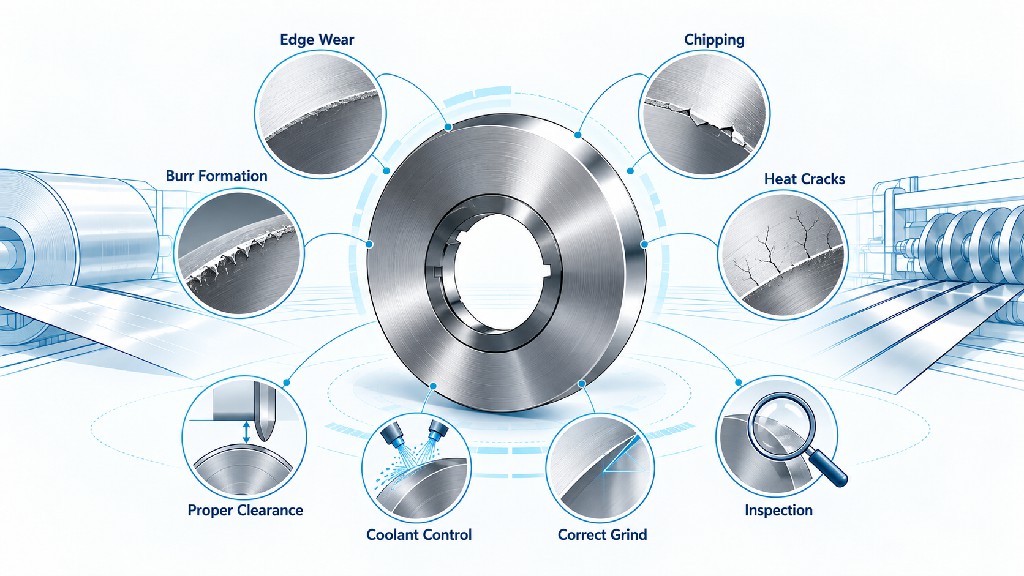
A controlled trial turns material claims into operating evidence. Start with the current knife as a baseline. If D2 is already producing acceptable output and lasts through each scheduled maintenance period, record that success before purchasing a premium alternative. A trial should answer the narrower question: Does the proposed knife improve accepted output, maintenance reliability or total cost enough to justify changing the specification?
Use at least two comparable runs per candidate where practical; more may be needed if normal production variability is high. Ideally alternate candidate sets under similar substrate lots and process settings. A single successful carbide run is not proof of a long-term life advantage, particularly where random chipping is a risk. Compare like with like: equivalent geometry, finish, sharpening state, upper/lower pair condition, line tension and machine settings. If a supplier recommends different geometry to suit the grade, test the material-plus-geometry system as a distinct proposal rather than attributing all improvement to chemistry.
| Metric to record | Practical definition | Why purchasing needs it |
|---|---|---|
| Accepted output per edge interval | Conforming linear meters, area or good rolls before removal | Direct measure of useful life |
| Rejection point | Measured burr, dust, fuzz, particulate, edge wave or tear criterion | Ensures every material is judged at the same quality level |
| Failure classification | Gradual rounding, adhesive pickup, chip, crack, corrosion or accidental damage | Distinguishes metallurgy from process faults |
| Changeover impact | Minutes of unscheduled stoppage and labor required | Converts tool life into operational cost |
| Grinding history | Dates, costs, stock removed, diameter/thickness after service | Measures economic reuse and dimensional survival |
| Material/lot traceability | Substrate grade, coating batch, thickness and supplier | Allows valid comparisons across production conditions |
| Setup record | Side clearance, overlap, side force, knife holder and arbor condition | Identifies hidden confounders |
| Quality result | Measured target edge condition and rejected quantity | Protects the buyer against a false productivity gain |
Operators should establish the stop criterion before the trial, not after seeing which knife appears to last longer. Capture photographs or microscope images of the same edge region at comparable intervals. Record line speed, substrate thickness, coating and temperature where applicable. When equipment can measure radial and axial runout, include those figures before and after installation. Document any deviations rather than discarding unfavorable results.
Trial review should separate technical acceptance from economic acceptance. A premium knife may meet a particle specification that the D2 baseline cannot achieve, making it technically necessary even if the invoice cost is high. Conversely, a carbide ring may show outstanding wear resistance but cause unacceptable random chipping, making it a poor production choice. The successful purchase is the one that meets quality limits with predictable availability and a defensible cost per accepted output.
It is tempting to write a drawing that specifies only “D2, 60 HRC” or “M42, 67 HRC.” Neither instruction is complete. The microstructure created by heat treatment and the stresses introduced during grinding influence whether an industrial knife develops a sharp, durable edge or deteriorates prematurely. Decarburization at a steel surface may create a weak layer; overheating during finish grinding may cause local tempering, burns or cracking. Residual stress and poor dimensional stabilization may affect flatness after repeated use.
For D2 and HSS, request a realistic, application-specific hardness target and treatment confirmation. Not every D2 rotary shear should be heat treated to the maximum attainable hardness. Large rings and small thin knives may need different process allowances to control distortion. Deep cryogenic processing can be offered as an additional treatment in some tool-steel workflows, but it should not be purchased on the assumption that it always gives a fixed percentage of extra life. Require before-and-after comparison in the actual application if a supplier claims an economic benefit.
Edge preparation is just as important. A single bevel, double bevel, hollow-ground profile or special micro-bevel changes the load distribution at the cutting edge. An aggressively thin edge may cut delicate film beautifully but chip under side loading. A more robust edge may survive harsher conditions yet produce too much deformation on thin foil. Surface finish affects friction and adhesive buildup; abrasive scratches running toward an edge can become initiation sites for damage. Knife designers must also control concentricity, bore fit, flatness, parallelism and the geometry of the full knife stack.
These specifications should be attached to the actual part drawing and inspection plan. GUANG CHUAN's multi-groove rotary slitter product illustrates that even within the same material family, groove form, runout and edge configuration are part of the tool specification. A buyer should not borrow one catalog's tolerance numbers and treat them as universal requirements; the necessary tolerances follow the specific machine and product-quality target.
Specify whether sharpening is possible, who will do it, which dimensions may change and what defines end of life. A carbide knife may require specialized diamond grinding. HSS and D2 need appropriate wheel selection, cooling and dressing. A knife should not be returned to the line just because it looks sharp; it should pass dimensional and edge-condition inspection. If sharpening alters the effective knife diameter or bevel in ways the holder cannot accommodate, the economic model must stop counting further cycles. A lower-cost tool that tolerates three reliable regrinds may outperform a premium tool that is discarded after one unpredictable failure.
Technical documentation reduces ambiguity and supplier substitution risk. For wrought D2 alloy tool steel, ASTM A681-24 is an appropriate reference for alloy tool-steel materials. For conventional high-speed steels such as M2 and M42, ASTM A600-92a(2024) covers high-speed tool-steel material requirements. ISO 4957:2018 is another important tool-steel reference covering cold-work and high-speed grades. These are primarily material standards; they do not independently certify that a finished slitter knife has the correct runout, bevel, edge finish or production life.
Avoid claiming that ASTM A681 or A600 is a universal product certification for all slitter knives. A finished tool also needs drawing conformity, processing control and inspection evidence. Where a carbide grade is proposed, request the binder family and percentage, grain-size class, hardness test scale, density or other applicable grade properties, plus traceability to the supplier's stated material. Specific carbide test methods and acceptance values should be selected with the manufacturer for the intended grade and tool construction.
A professional inspection and delivery file may contain: a material certificate or traceable certificate of analysis; heat-treatment or hardness record where applicable; a dimensional report; edge and surface-condition checks; lot identification; and packaging or corrosion-protection confirmation. For tight-tolerance cutting systems, it may also be worth requiring runout and parallelism measurements on a defined fixture. Importantly, an impressive-sounding certificate is not a substitute for a named inspection method and agreed acceptance tolerance.
The hardness acceptance method deserves explicit treatment. Steel knife hardness may be checked with an appropriate Rockwell method and carbide hardness with a specified Vickers or Rockwell A method. Measurement position and finished-part geometry affect the feasibility and interpretation of tests. Very thin sections may not permit ordinary indentation testing on the finished edge without damage. In such cases, agree on representative coupons or an alternative validated approach before production. Referencing a standard without clarifying how the part is inspected can create disputes at delivery.
The most useful quotation request provides enough information for a manufacturer to recommend a design instead of guessing. GUANG CHUAN's custom blade engineering service describes drawing-to-product manufacturing, sample-based replacement work and material-selection assistance. A good technical RFQ should make it possible to compare D2, M2, M42 and carbide solutions on the same basis.
| RFQ field | Information to provide or request |
|---|---|
| Machine and cutting method | OEM/model, rotary shear or score arrangement, upper/lower set, operating speed |
| Work material | Paper or film type, foil alloy, steel grade, coatings, fillers, adhesive, thickness range and hardness/temper if relevant |
| Blade dimensions | Outside diameter, inside diameter, thickness, keyways, grooves, holes, bevel angle and detailed drawings |
| Quality requirement | Burr height, dust/particles, fuzz, tearing, allowable edge defects, slit-width tolerance and sampling method |
| Material proposal | D2, M2, M42 or named carbide grade, including an alternative recommendation with justification |
| Finished-tool specification | Heat-treatment/hardness target where applicable, flatness, parallelism, radial/axial runout, edge finish and inspection method |
| Service plan | Estimated usable grind allowance, resharpening route, replacement criteria, packing and safe handling |
| Commercial basis | Quantity, delivered unit price, currency, lead time, Incoterm, tooling charges, repeat-order plan and warranty scope |
| Evidence required | Material traceability, dimensional report, hardness/grade data and agreed trial acceptance record |
If an original drawing is unavailable, supply a representative unused or serviceable sample and measured dimensions; a severely damaged sample may not preserve the intended original geometry. Include photographs of the holder and the mating knife. Explain whether the current failure is gradual dullness, sudden breakage, burr increase or material pickup. One of the highest-value statements in an RFQ is simply: “Our current D2 set produces acceptable quality for approximately X accepted meters, and we need Y meters between planned stops.” That describes an actionable business problem.
Ask vendors to quote each option in the same currency and quantity, with freight and ancillary services separated. Compare the actual finished-knife specification, not generic raw material grades. A carbide quotation without binder or grain-size information is not necessarily comparable to another carbide quotation. Similarly, the labels “HSS,” “SKD11” and “premium alloy steel” may conceal significant differences in origin, certification and processing. A technical comparison is meaningful only after the offered material identities have been made explicit.
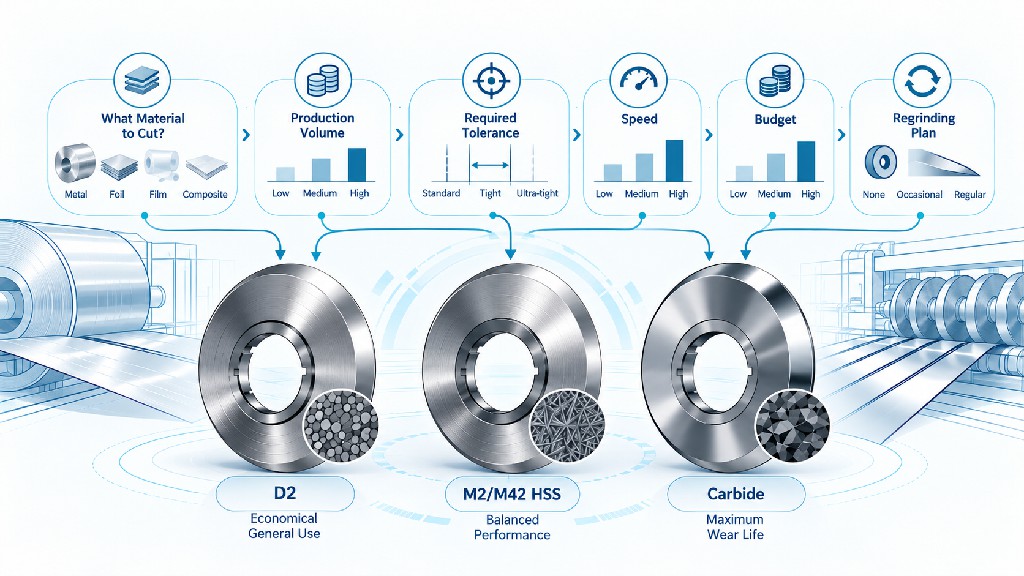
One mistake is assuming that a higher hardness number guarantees better slitting. It does not. HRC is relevant for steel, while carbide usually appears with HRA or HV values, and the operating result is governed by several properties and process variables. A second mistake is upgrading the knife when the actual cause of poor edge quality is misalignment or damaged bearings. The most expensive material cannot compensate for continuous uncontrolled rubbing.
A third mistake is applying one universal life multiplier. Claims such as “carbide lasts three to five times longer” may describe a particular supplier experience or controlled application, but they are not a scientifically transferable rule for every paper, film or metal slitting line. Without substrate, geometry, stop threshold and operating conditions, the number has little purchasing value. Treat any quoted multiplier as a testable hypothesis with a defined baseline, not as a warranty.
A fourth mistake is treating M2 and M42 as interchangeable because both are labeled HSS. Their representative chemical compositions differ materially, particularly in cobalt and molybdenum, and so do their economics. A fifth is forgetting sharpening: purchase price may be less important than the total number of useful cutting intervals, while an incorrectly reground edge may invalidate any promised benefit from expensive steel.
A sixth mistake is over-specifying carbide without a grade. Cobalt binder percentage, grain size, finished geometry and handling requirements are not minor details. A seventh is mixing cost units. One quote may use price per blade, another per matched pair, and a third per stack. One maintenance log may track line running hours while another records accepted meters. Normalize the figures before presenting a purchasing recommendation.
Finally, avoid evaluating a replacement solely on a short, clean test substrate if routine production includes abrasives, adhesive buildup or occasional process shocks. Qualification should reflect normal difficult operating conditions, and the commercial model should explicitly account for the downside of sudden tool damage. A robust, repeatable moderate-performing tool may be the better procurement decision for an unstable or low-volume production environment.
A clear decision path prevents sales terminology from taking the place of engineering. First verify that the knife geometry, holder and machine setup are within the accepted specification. Next identify the reason the current knife is removed. If the cause is mechanical impact or abnormal contact, correct the machine condition before using a premium material trial as the remedy. If the cause is gradual wear, decide whether it happens before a planned production stop and creates real cost.
If existing D2 knives already complete a full batch with acceptable quality, there is no automatic business case to replace them. If D2 wears out midway through a production campaign, trial M2 with controlled geometry and a defined quality endpoint. If M2 is still insufficient, determine whether the next limitation is high wear, thermal deterioration or another failure mechanism. M42 may be the right high-hardness HSS trial; carbide may offer a larger wear-resistance opportunity if edge chipping can be controlled. Which one wins must be decided through accepted output and TCO.
For new machines without baseline history, shortlist two grades based on the duty: often D2 and M2 for general applications, or M2 and a carefully selected carbide grade for highly abrasive, precision, continuous work. Specify interchangeable dimensions and record the first production trials. Keep a spare matched knife set available, especially during the first carbide qualification period. A good material program evolves from measured evidence rather than permanently committing to the most expensive option in the catalog.
The following practical questions summarize the selection logic: Can the current knife meet the product's edge specification? Does it last until the next planned maintenance window? Is wear gradual and predictable, or does the edge fail randomly? Can the new material be reground locally? How much accepted production will be gained? Does the gain survive a conservative downtime and breakage analysis? If any answer is unknown, gather evidence before issuing a long-term purchase order.
Neither is universally better. D2 offers a strong baseline for many cold-cutting applications and can be economical when the knife survives the required run length. M2 may be preferable when a balanced high-speed-steel grade delivers more accepted output or longer intervals between sharpening. Compare finished blades with the same cut quality and machine setup rather than comparing nominal hardness alone.
No. Representative published hardness values are around 67 HRC for M42 and 64 HRC for M2, but life depends on how the blade wears or fails. M42's cobalt-containing chemistry is useful in selected demanding applications, especially where hot-hardness behavior matters. On a mild converting job, that benefit may not offset its purchase and maintenance cost. Under mechanical shock, the edge design and process condition may matter more than the extra hardness.
There is no credible universal answer without a specific carbide grade, substrate, cutting geometry and quality threshold. Some stable abrasive applications may show a large improvement; other lines may lose carbide edges to micro-chipping before they demonstrate an economic advantage. Request a controlled production trial and compare accepted meters or good rolls between identical quality-based interventions. Treat any advertised multiple as conditional until verified.
Many carbide cutting tools can be reground by a qualified specialist, usually using appropriate diamond-abrasive processes, but the feasibility depends on their construction, remaining dimensions and damage. A chipped, cracked or undersized ring may be uneconomical or unsafe to rework. Ask for the permitted stock-removal allowance and a documented inspection procedure before including multiple sharpening cycles in a TCO model.
No. A suitable carbide grade may maintain a stable fine edge in controlled thin-foil service, but cleanliness also depends on bevel design, micro-chipping resistance, runout, side force, mating knife condition and substrate control. The right grade can help preserve edge quality; it cannot make incorrect shear geometry disappear. Qualification should measure burr, particles, tearing and other application-specific defects rather than only knife wear.
Start with strip thickness, strength and surface condition, required burr tolerance and the actual rotary-shear design. D2 and selected HSS tools are established candidates. Carbide may be appropriate in some engineered applications but is not automatically the safest choice for high-load or impact-prone conditions. Work with the knife and machine supplier to validate the complete system, including spacers, clearance, overlap and support rings.
A solid cemented-carbide knife or ring uses the selected carbide material across its principal body. A carbide-tipped or composite construction places carbide at the working edge or contact area while another substrate supports it. Construction changes stiffness, joining requirements, grinding strategy and failure risk. The two designs should be evaluated as separate products, even if both use the phrase “tungsten carbide” in a quotation.
For relevant wrought steels, buyers can reference ASTM A681 for D2-type alloy tool steel, ASTM A600 for M2/M42 high-speed steels, or ISO 4957 where appropriate. Then add the actual finished-knife drawing, hardness or material-grade acceptance plan, dimensional tolerances and inspection records. Carbide needs its own agreed grade properties and testing approach. A raw material standard alone is not a finished-knife performance certification.
No. Finished hardness must follow the steel, knife thickness, heat-treatment process, edge geometry and load. Uddeholm's D2-type brochure, for example, gives application-specific hardness recommendations and lists around 58–60 HRC for circular shears; that does not prescribe 60 HRC for every supplier or every rotary knife. Higher hardness can sacrifice damage tolerance, and the hardness test must be suitable for the finished part.
Compare price per equivalent tool or matched set, material identity, dimensions, edge finish, inspection plan, practical sharpening allowance, delivery time and actual accepted output. Calculate cost per accepted meter or good roll under the same quality threshold and include changeover, waste and unexpected damage. When performance evidence is missing, order trial quantities rather than forecasting savings from an unverified life multiplier.
A successful slitter knife is the least expensive qualified solution over its useful life—not necessarily the cheapest blade to purchase and not necessarily the hardest available grade. D2 is a valuable economical benchmark. M2 is a balanced HSS alternative for demanding converting work. M42 deserves attention when its higher attainable hardness and thermal characteristics solve a verified limitation. Carefully selected tungsten carbide can be compelling in abrasive, high-volume precision slitting, provided the equipment and handling practice control chipping and breakage.
GUANG CHUAN works with industrial knife buyers on custom blade engineering and manufacturing, including made-to-drawing and sample-based solutions. For an initial discussion, send the knife drawing or sample dimensions, machine model, substrate details, current knife material, actual wear or defect pattern, line speed and required finished-edge standard. Buyers may also review the company's precision paper-converting slitter knives and custom rotary knives for coil-related applications before requesting a comparative quotation.
Need help deciding between D2, M2, M42 and carbide slitter knives? Contact GUANG CHUAN through its contact page or OEM/ODM service page and ask for a material-and-geometry recommendation based on your cutting duty. A drawing, a sample, and even a basic record of existing knife life are enough to begin a more useful technical conversation than “Please quote your hardest blade.”
Technical and commercial note: Published metallurgy figures in this article are attributed directly to the relevant producer or standards organization. Material recommendations are starting points for engineering review. All purchase prices, grinding expenses, service-life intervals, production rates and calculated savings in the worked example are explicitly hypothetical; they are not supplier offers, field-test results or universal industry averages.

Leave A Message
Scan to WhatsApp :

 English