
Industrial Knives Blog | Technical Guides & Blade Solutions
Leave A Message
If you have any questions, please to contact us in time, or send an email to us, thank you for your inquiry!
Submit
banner
Home

Blog

Blog

  • How to Choose Crusher Blades for PET, HDPE, PP, PVC and ABS
    Nov 08, 2026
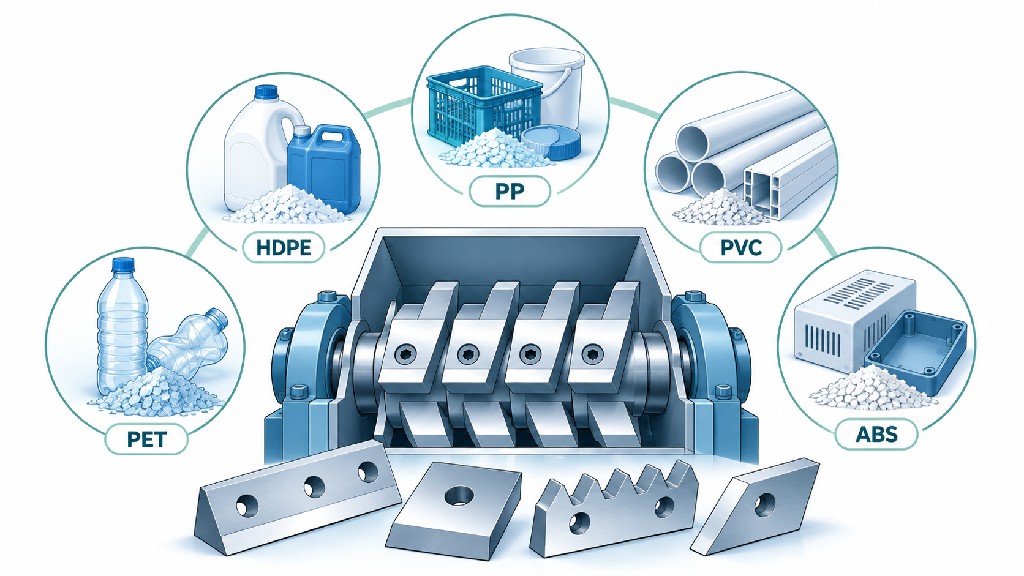
    Plastic crusher blade selection is not simply a choice between D2 steel and high-speed steel. A recycling line handling clean HDPE bottles presents a very different cutting duty from a line processing dirty PET bales, mineral-filled PVC profiles, thin polypropylene film or thick ABS injection-molding runners. The right replacement knife must fit the machine, shear the actual feedstock, survive its contaminants and preserve predictable output between maintenance stops. This buyer's guide is written for recycling-plant owners, maintenance engineers, plastic processors, equipment OEMs and procurement teams comparing replacement PET crusher blades, HDPE crusher knives, PP crusher blades, PVC crusher blades and ABS granulator blades. It explains the operating differences that affect blade mater...
  • Rotor Knives vs Fixed Bed Knives in Plastic Granulators
    Nov 07, 2026
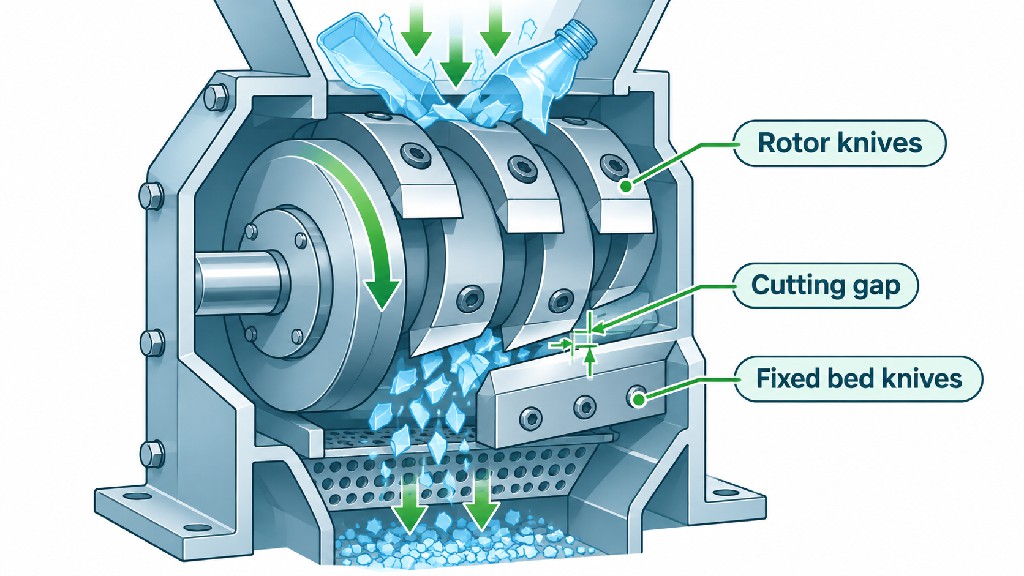
    Plastic granulators do not produce clean, predictable regrind simply because their rotor turns quickly. The cutting action comes from two cooperating components: granulator rotor knives , which travel with the rotating shaft, and fixed bed knives , which remain stationary in the cutting chamber. The material passes through a controlled clearance between these edges, is cut repeatedly, and usually remains in the chamber until it can pass through a discharge screen. That relationship matters to everyone involved in replacement-blade purchasing. A perfectly manufactured moving knife cannot compensate for a chipped stator knife, a distorted mounting seat, or an incorrectly adjusted gap. Conversely, replacing the fixed knife alone is unlikely to correct an out-of-round rotor, damaged blade clam...
  • Crusher Blades vs Granulator Knives: What Is the Difference?
    Nov 06, 2026
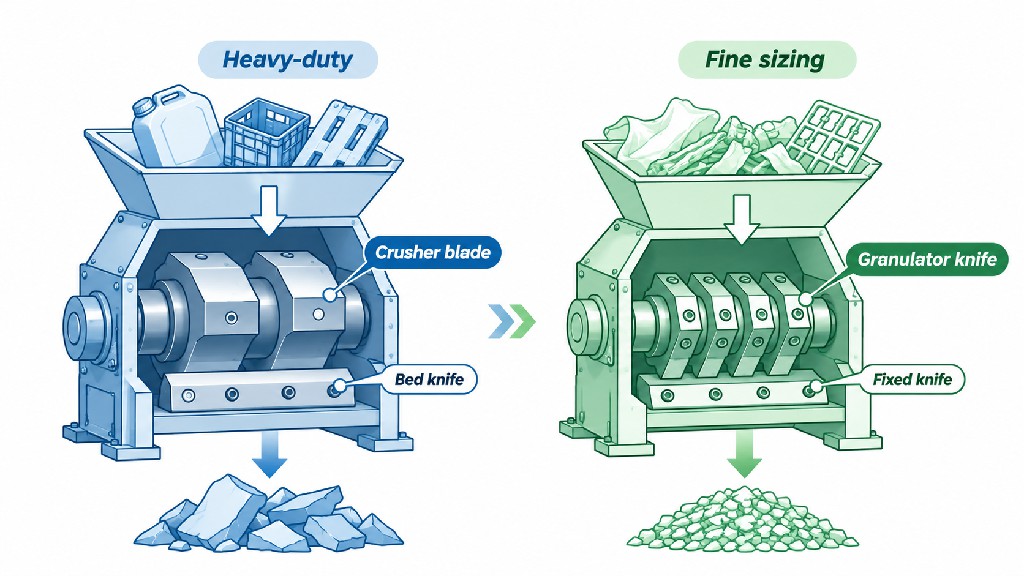
    Crusher blades vs granulator blades is a comparison that sounds simple until a purchasing team discovers that two suppliers use different names for the same cutting system. A plastic processor may call its machine a crusher, an OEM may list it as a granulator, and a replacement-knife quotation may use both descriptions. The name alone does not tell you whether the knife will fit, hold its edge, or produce the required regrind. The useful answer is this: crusher blades and granulator knives are not necessarily two distinct product families. In plastics recycling, a high-speed plastic crusher often works as a granulator, using rotating knives, stationary bed knives, and a perforated discharge screen. However, the term crusher blade is also applied to heavier primary-reduction equipment, whi...
  • Plastic Crusher Blades: Types, Materials and Selection Guide
    Nov 05, 2026
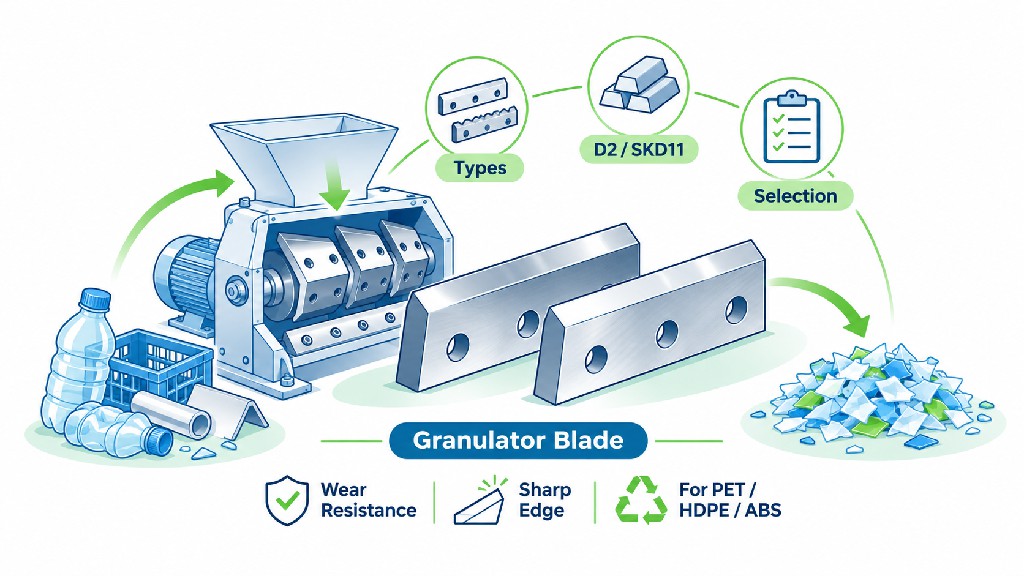
    Plastic crusher blades determine far more than how quickly a recycling machine reduces scrap. The right knife set affects the shape of each cut, motor load, dust generation, cleaning time, and how often a production team must stop to sharpen or replace cutting tools. For an injection-molding plant processing clean sprues, a sharp standard tool-steel set may offer excellent value. A recycler processing abrasive post-consumer bottles or glass-filled engineering plastics may need a different combination of steel, edge geometry, maintenance practices, and contamination control. This guide explains how to evaluate plastic crusher blades, crusher knives, plastic granulator blades, granulator knives, and plastic recycling blades for real production conditions. It compares blade formats and stee...
  • How to Order Replacement Circular Slitter Knives: Dimensions, Drawings and Tolerances Required
    Nov 04, 2026
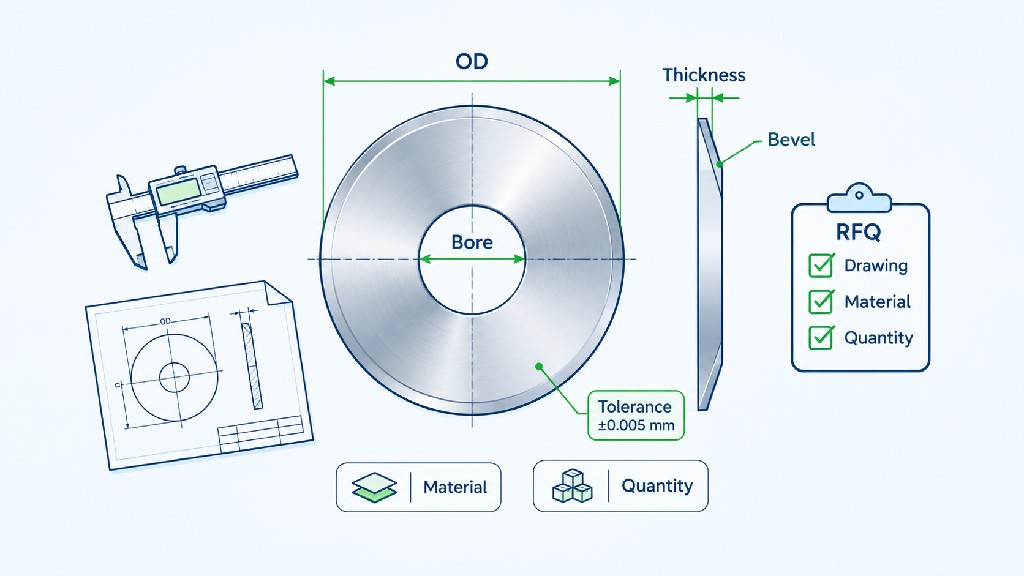
    An engineering-led purchasing guide for slitter-rewinder operators, converting plants, metal service centers, equipment OEMs and industrial knife distributors. When a slitting line needs replacement knives, the purchasing question appears simple: send the old blade diameter and buy another one. In practice, the costliest mistakes happen because a replacement circular knife looks correct on the workbench but behaves differently when installed. A bore that does not fit the arbor, an incorrectly oriented bevel, a changed cutting-face location, or excessive face runout can turn a routine maintenance order into production scrap and unplanned downtime. Quick answer: To order reliable replacement slitter knives, send the supplier a dimensioned drawing or a clearly identified reference sample. S...
  • Why Circular Slitter Knives Wear Unevenly and How to Prevent It
    Nov 03, 2026
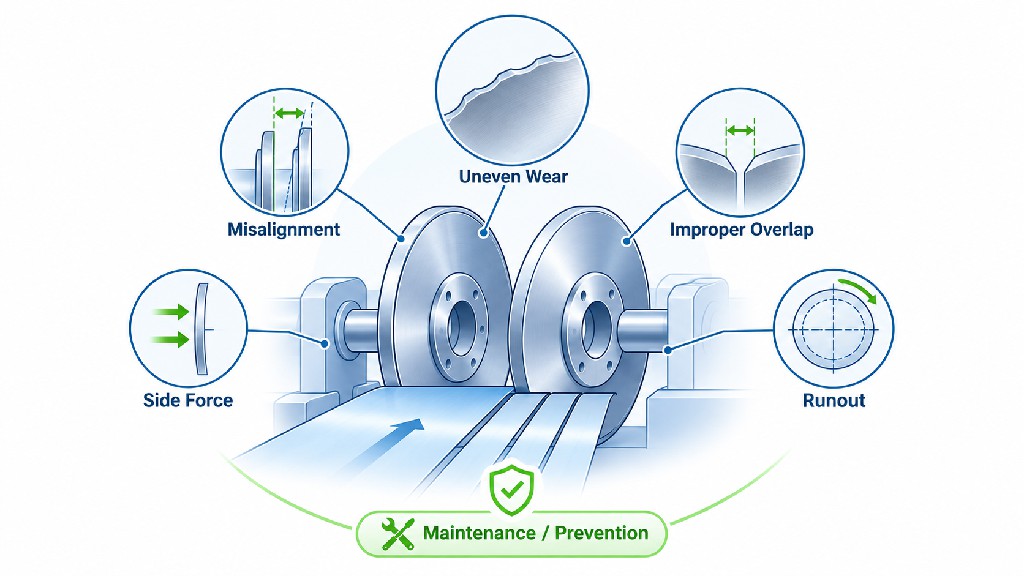
      Slitter knife wear is rarely a blade-only problem. When one rotary knife dulls faster than its neighbors, one side of an edge becomes polished, or a replacement blade chips after a few shifts, the cause may be hidden in the interaction between blade geometry, the mating knife, shaft or holder runout, overlap, clearance, side loading, web tension, and the actual material being processed. Buying a harder knife before identifying that interaction can increase tooling costs without correcting the failure. This practical troubleshooting guide explains how to identify uneven slitter blade wear, distinguish normal dulling from abnormal slitter knife edge wear, measure the machine conditions that drive rotary knife wear, and decide when to correct the setup, regrind a knife, or specify a...
  • Slitter Knife Runout, Flatness and Parallelism: Why Precision Matters
    Nov 02, 2026
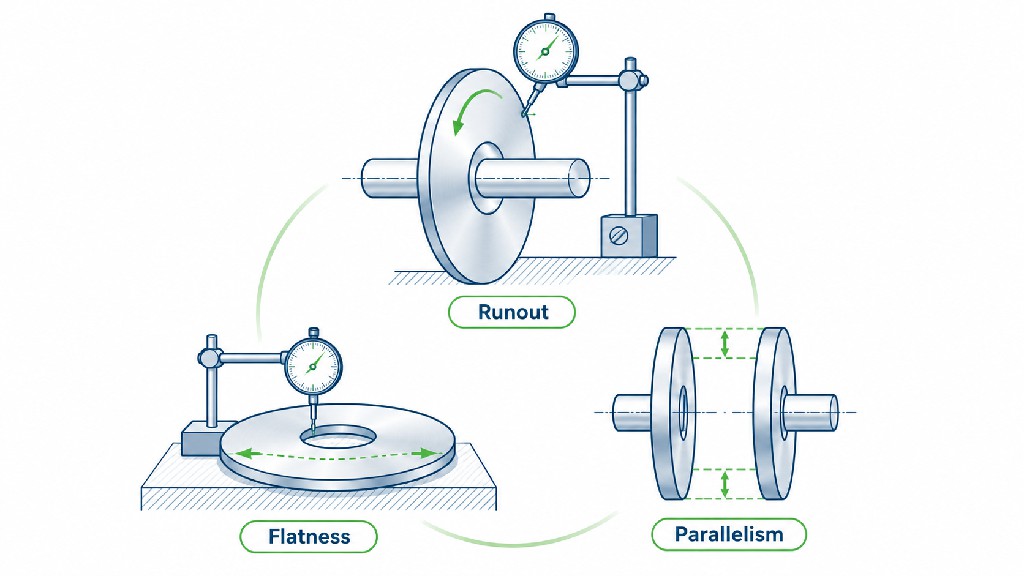
    A circular slitter knife can look flawless on a purchasing photograph and still fail on the machine. Its edge may be sharp, its material grade may be correct, and its outside diameter may match the drawing. Yet the finished rolls show fuzzy edges, inconsistent slit width, metal burrs, film stretching or unusually rapid blade wear. In cases like these, the missing specification may be slitter knife runout, face flatness, side-face parallelism or the way the knife is located and clamped on its actual shaft. These characteristics are easy to confuse because they all describe small geometric deviations. They are not interchangeable. A knife with low radial runout can still wobble sideways. Two faces can be parallel without being truly flat. A perfectly machined bore can rotate eccentrically if...
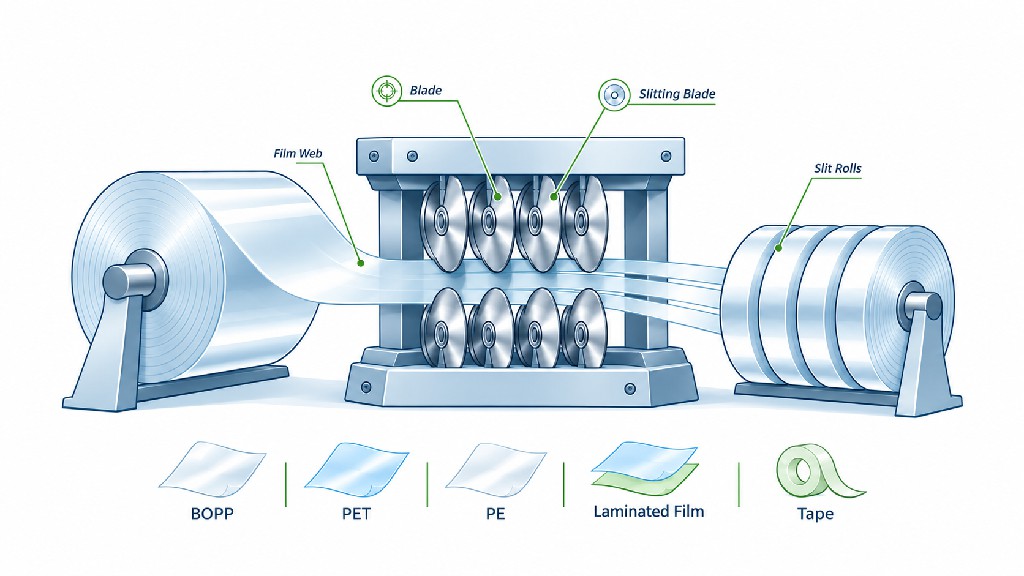
  • Film Slitting Blades: Choosing the Right Knife for BOPP, PET, PE and Laminated Film
    Nov 01, 2026
    For a flexible-packaging converter, a slitting blade is not simply a spare part. It sits at the point where an expensive printed or laminated master roll becomes a product that customers will inspect, unwind, seal, coat, or process again. A clean slit protects usable yield and roll appearance. A poor slit can leave stretched edges, microscopic debris, blocked layers, inconsistent roll widths, and complaints that are much more expensive than the knife itself. Choosing film slitting blades therefore requires two decisions, not one: select the cutting process that suits the web and machine, then specify the knife geometry, material, mounting dimensions, edge finish, and service plan for that process. A low-cost razor can be the best commercial choice for a clean, simple film running on an app...
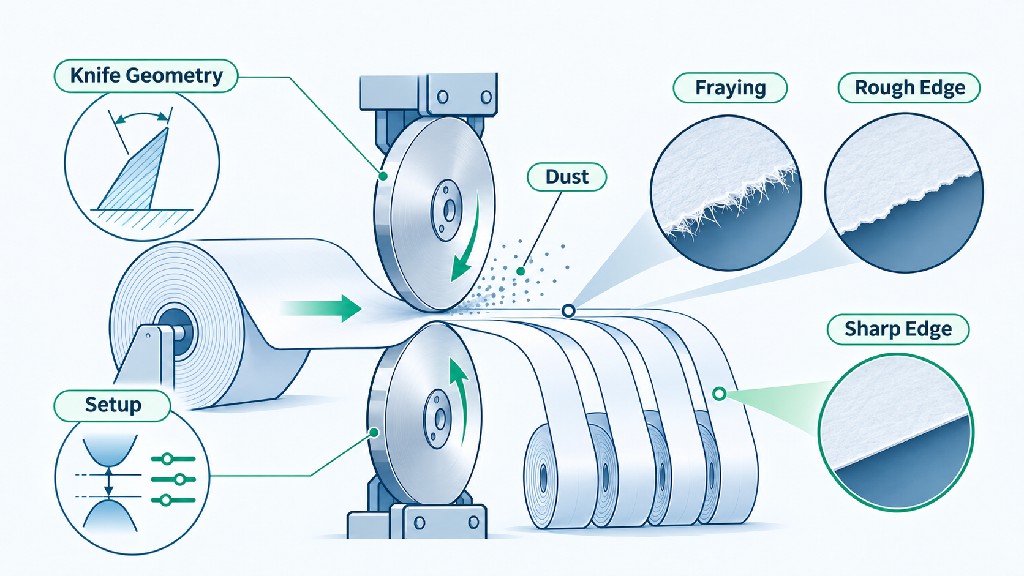
  • Paper Slitter Knives: How to Reduce Dust, Fraying and Rough Edges
    Oct 31, 2026
    A paper roll can look perfect before it enters a slitter rewinder and emerge with fuzzy edges, loose fibers, coating debris, or poorly wound narrow rolls. The immediate reaction is often to replace the knives. Sometimes that works. Frequently, however, the new paper slitter knives produce the same defects because the actual cause is excessive overlap, incorrect side force, worn lower knives, unstable web tension, an unsuitable blade profile, or a change in the paper itself. For paper mills, printers, label converters, corrugated-board plants, and packaging manufacturers, the consequences extend beyond appearance. Loose fibers can contaminate printing equipment and finished products. Rough edges may contribute to web breaks, inaccurate slit width, winding defects, rejected rolls, and repeat...
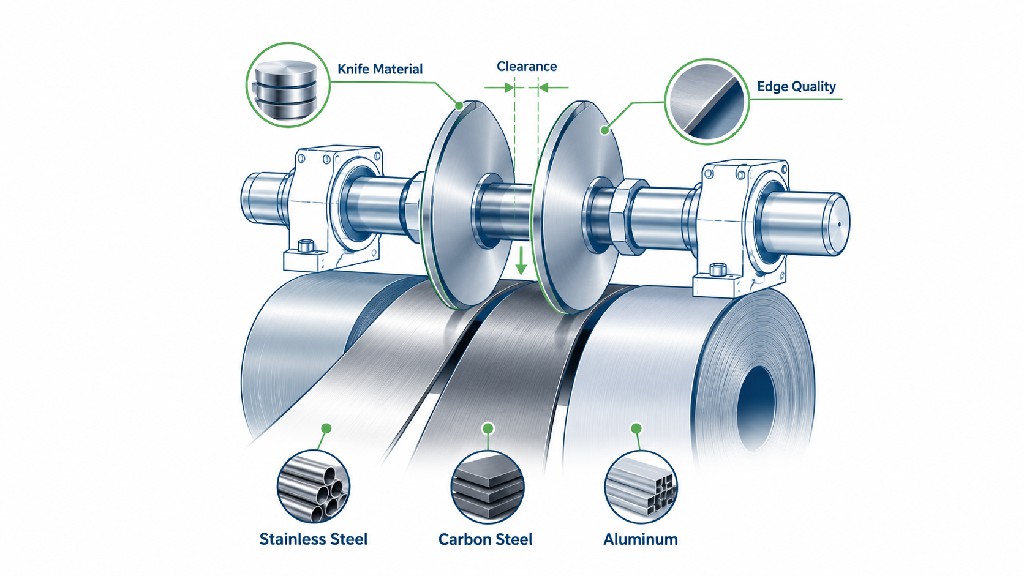
  • How to Choose Circular Slitter Knives for Stainless Steel, Carbon Steel and Aluminum Coil
    Oct 29, 2026
    Choosing metal slitting knives is not simply a matter of ordering a round blade with the correct outside diameter. A stainless-steel service center, a carbon-steel strip processor and an aluminum-coil converter may use similar rotary slitting equipment, but the materials behave differently as the knives shear them. A knife that delivers an acceptable edge on mild steel may leave troublesome burrs on hard stainless strip. A knife that survives a demanding steel production campaign may be unnecessarily expensive—or have the wrong cutting geometry—for thin, soft aluminum. For purchasing managers, maintenance engineers, line operators and equipment OEMs, the useful buying question is: Which knife material, edge geometry and dimensional specification will produce the required slit q...
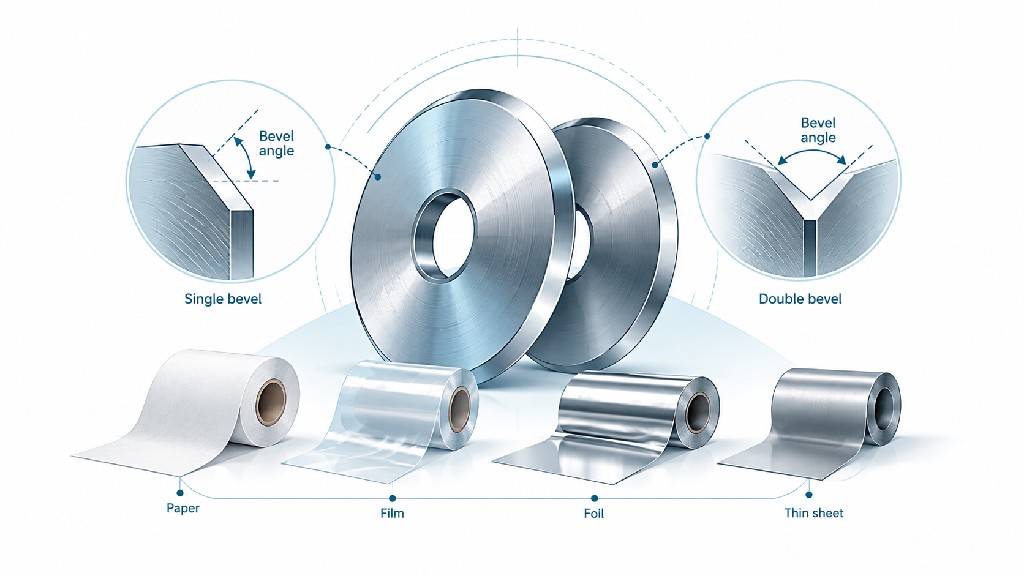
  • How to Choose Slitter Knife Bevel Angle for Different Materials
    Oct 28, 2026
    The right slitter knife bevel angle helps a rotary cutting edge separate the material cleanly without unnecessary distortion, dust, burrs, or premature chipping. But the right angle for thin tissue is not necessarily right for coated board, a laminated packaging film, an adhesive tape, or stainless-steel coil. Even two knives described as “45-degree blades” may have different cutting profiles if one drawing measures an included edge angle while the other records a grind angle from a blade face. This technical and purchasing guide explains how to interpret a slitter blade angle, compare single-bevel and double-bevel designs, and select a practical starting geometry for different substrates. It is written for paper and film converters, metal-coil processors, maintenance engineers...
  • Top and Bottom Slitter Knives: Functions, Geometry and Setup Explained
    Oct 26, 2026
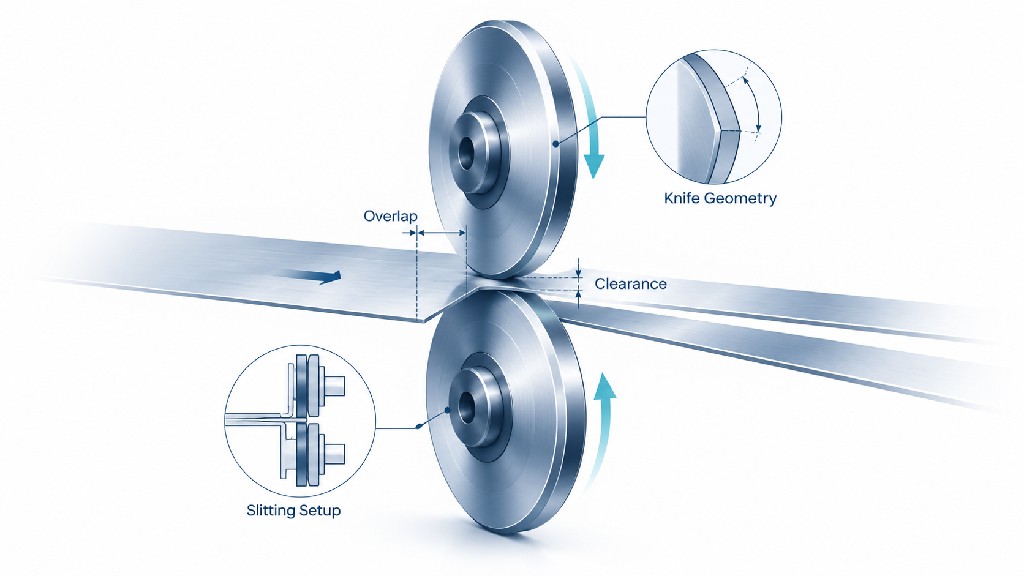
    An engineering and purchasing guide to upper slitter knives, lower slitter knives, paired shear cutting, dimensional accuracy, troubleshooting, and custom replacement specifications. A rotary slitting line is only as reliable as the relationship between its cutting tools. One knife may have an excellent steel grade, a beautifully polished edge, and a precise bore, yet fail to produce acceptable strips when it is paired with the wrong mating component. Paper edges become fuzzy, plastic film stretches, aluminum foil tears, or steel strip develops excessive burrs. The immediate temptation is to buy a sharper blade. The more useful response is to ask whether the upper knife, lower knife, holder, arbor, and substrate are working as a coordinated cutting system. Top and bottom slitter knives are...
1 2 3 4
GET IN TOUCH

Contact us

Just send us your questions or concerns about starting a new project
If you have any questions, please to contact us in time, or send an email to us, thank you for your inquiry!
Send Message

Leave A Message

Leave A Message
If you have any questions, please to contact us in time, or send an email to us, thank you for your inquiry!
submit

Home

Products

WhatsApp

contact