



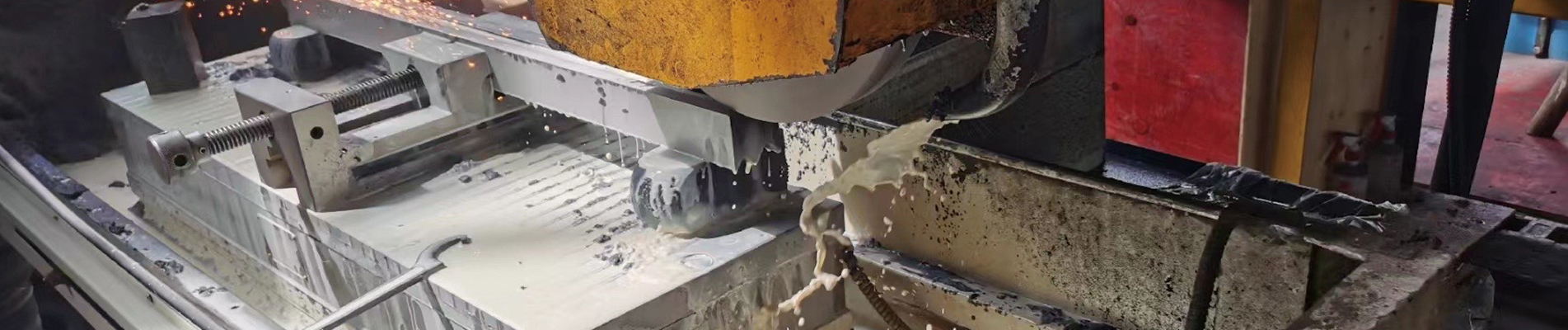

A practical guide to selecting industrial circular slitting blades by material, cutting method, blade grade, edge geometry and machine parameters
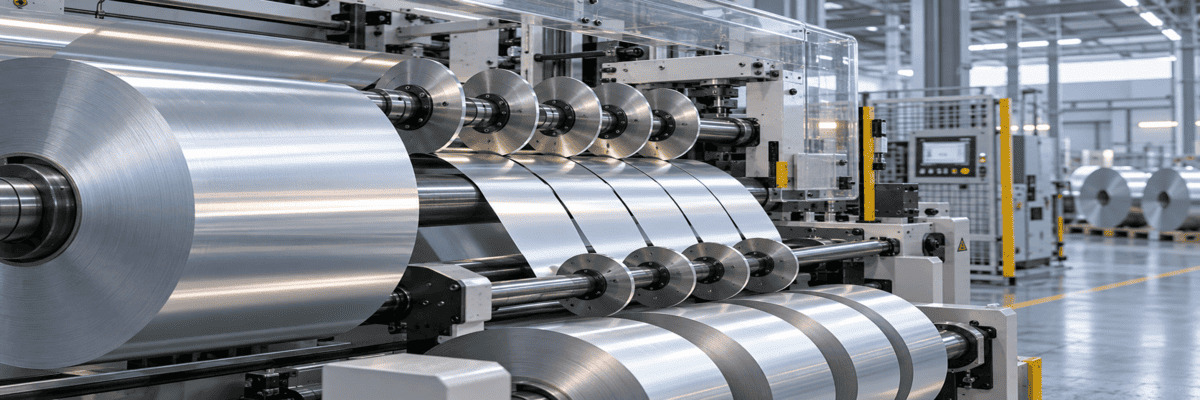
Introduction
The right circular blade does more than separate material. It determines edge quality, line speed, waste rate, blade-change frequency and the stability of the entire converting process. A blade that looks correct by diameter alone may still create burrs, dust, wrinkling, heat buildup or premature wear if its material, thickness, edge profile or mounting tolerance does not match the application.
In industrial blade catalogs, the term “circular saw blade” is sometimes used broadly for round cutting tools. This guide focuses on industrial circular slitting knives and rotary blades used on slitter-rewinders and related production equipment—not toothed blades for handheld woodworking saws.
1. Define the Cutting Application Before Selecting the Blade
Blade selection should begin with the material being processed—not with a steel grade or a familiar part number. Record the material structure, thickness range, hardness or abrasiveness, coating or adhesive content, number of lanes, line speed and acceptable edge condition. A thin flexible film needs a different cutting approach from copper foil, coated paper or thin stainless strip.
|
Application |
Primary Goal |
Typical Starting Point |
Main Risk |
|
Paper and board |
Clean edge, low dust, stable web |
Shear slitting with matched top and bottom knives |
Dust, fiber pull and edge crushing |
|
Plastic film and laminates |
No stretching, tearing or heat marks |
Sharp, low-friction rotary slitting edge |
Wrinkles, fused edges and web wander |
|
Adhesive tape or labels |
Clean release and limited adhesive pickup |
Polished edge; coating or grade chosen for buildup control |
Glue buildup and frequent cleaning |
|
Aluminum or copper foil |
Low burr and minimal deformation |
Precision shear slitting with controlled overlap and clearance |
Burr, edge wave and rapid wear |
|
Thin steel strip |
Straight edge and controlled burr height |
High-rigidity top/bottom knife system |
Chipping, deflection and heat |
The table provides starting points only. Final geometry and blade grade must be confirmed against the machine design, material sample and production target.
2. Match the Blade to the Cutting Method
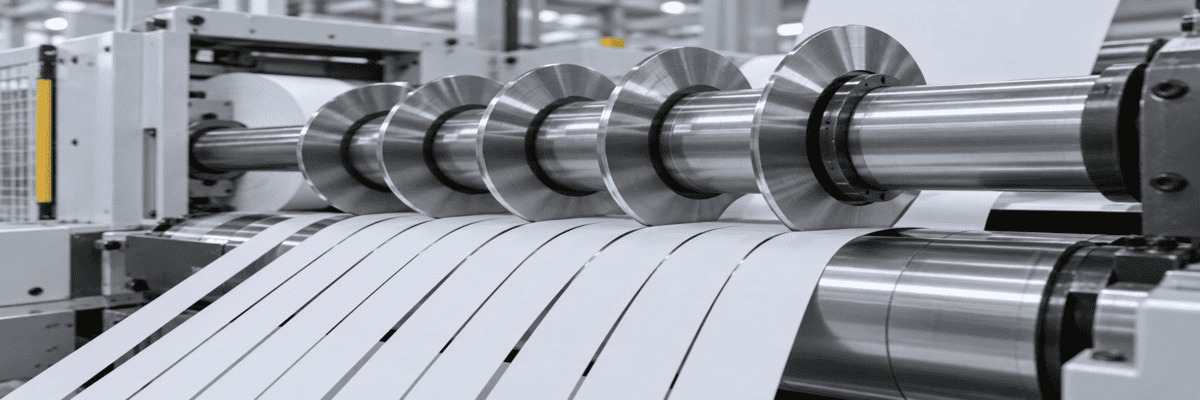
Shear slitting uses an upper circular knife against a lower knife, creating a scissor-like cut. It is widely used where clean edges and close dimensional control are required. Performance depends on the complete knife pair: edge condition, axial clearance, overlap, concentricity, holder rigidity and web tension all matter.
In score cutting, a circular knife presses the material against a hardened anvil or roller. It can be practical for selected papers, nonwovens and pressure-sensitive materials, but excessive pressure may crush the edge, increase dust or shorten blade life.
Razor slitting is common for very thin films. It uses a stationary or in-air razor rather than a conventional top-and-bottom circular knife pair. If the web is sensitive to deformation, comparing razor and shear slitting during process development can prevent purchasing the wrong blade system.
3. Choose the Blade Material for Wear, Toughness and Cost
There is no universally “best” blade material. Higher hardness can improve wear resistance, but excessive brittleness may increase chipping risk when alignment is poor, loads fluctuate or the material contains hard inclusions. The most economical choice balances edge retention, toughness, regrinding, downtime and replacement cost.
|
Blade Material |
Typical Use |
Key Advantage |
Selection Note |
|
D2 / SKD11 tool steel |
General industrial slitting; paper, film and selected foils |
Good wear resistance, dimensional stability and value |
A strong general-purpose starting point |
|
Cr12MoV |
Cost-sensitive general slitting applications |
Useful wear resistance with broad manufacturing availability |
Confirm heat treatment and actual hardness |
|
High-speed steel (HSS) |
Higher-speed or tougher cutting conditions |
Better hot hardness and toughness than many conventional tool steels |
Higher cost than standard tool steel |
|
Tungsten carbide |
Abrasive materials, ultra-thin foil or long production runs |
Very high wear resistance and long edge retention |
More brittle; requires accurate mounting and stable equipment |
|
Stainless steel grades |
Food, wet or corrosion-sensitive processing |
Corrosion resistance and easier sanitation |
Grade and compliance must match the end-use requirement |
4. Confirm Every Critical Dimension
A replacement blade should never be ordered from outside diameter alone. Small differences in mounting geometry can cause runout, vibration, poor knife overlap or unsafe installation. Use a drawing whenever possible and verify dimensions against both the existing blade and the machine manual.
Procurement tip: For a first order, send a dimensioned drawing plus clear photos of both blade faces and the installed knife assembly. If no drawing exists, provide a sample blade for measurement and confirm which dimensions are functionally critical.
5. Select the Edge Geometry for the Material and Cut
Edge geometry controls penetration, cutting force, edge strength and the way material moves through the nip. A more acute edge can cut soft, thin material with lower force, but it is also more vulnerable to chipping and roll-over. A stronger edge may last longer on tougher material, but can increase deformation if it is too blunt for the web.
|
Edge Style |
Typical Use |
What to Confirm |
|
Single bevel |
Directional shear slitting and selected foil or film applications |
Confirm knife orientation before ordering |
|
Double bevel |
Balanced cutting loads and many general rotary cutting uses |
Angle and center position affect strength and tracking |
|
Polished smooth edge |
Film, foil, paper and adhesive-sensitive webs |
Surface finish can influence friction and material pickup |
|
Serrated or toothed edge |
Applications requiring puncture or sawing action |
Not interchangeable with precision smooth-edge slitter knives |
6. Check Machine and Operating Conditions
Even a correctly manufactured blade will underperform if the operating window is unstable. Share the following information with the blade supplier so the recommendation reflects the real line rather than only the nominal blade size:
Conclusion
Choosing the right circular saw blade for an industrial cutting application is a system decision. Material type establishes the cutting challenge; the cutting method determines how the edge engages the workpiece; the machine defines dimensional and mounting constraints; and blade grade, edge geometry and setup conditions determine whether the blade can deliver clean, stable cuts over an economical service life.
Guangchuan Blade supplies precision circular slitting knives, top and bottom slitter blades, and custom rotary cutting solutions in tool steels and tungsten carbide for paper, film, packaging and metal-foil applications. For an accurate recommendation, send your blade drawing, material information, machine model and current cutting problem with your inquiry.
Explore the product range: Circular Saw Blades / Circular Slitting Blades
Request a custom quotation: Contact Guangchuan Blade

Leave A Message
Scan to WhatsApp :

 English